Humpback Whales & Marine Wildlife
Learn about the humpback migration and the dolphins, turtles and seabirds you may encounter in the waters off the Gold Coast.
Humpback Whales
Humpback whales put on an incredible show as they migrate along the Queensland coast, making whale watching on the Gold Coast an unforgettable experience. Every year, they leave their feeding grounds in Antarctica from March to April and travel north between June and August to the Great Barrier Reef to give birth. They return south with their calves from August to early November, offering plenty of opportunities to witness their journey.
Breaching
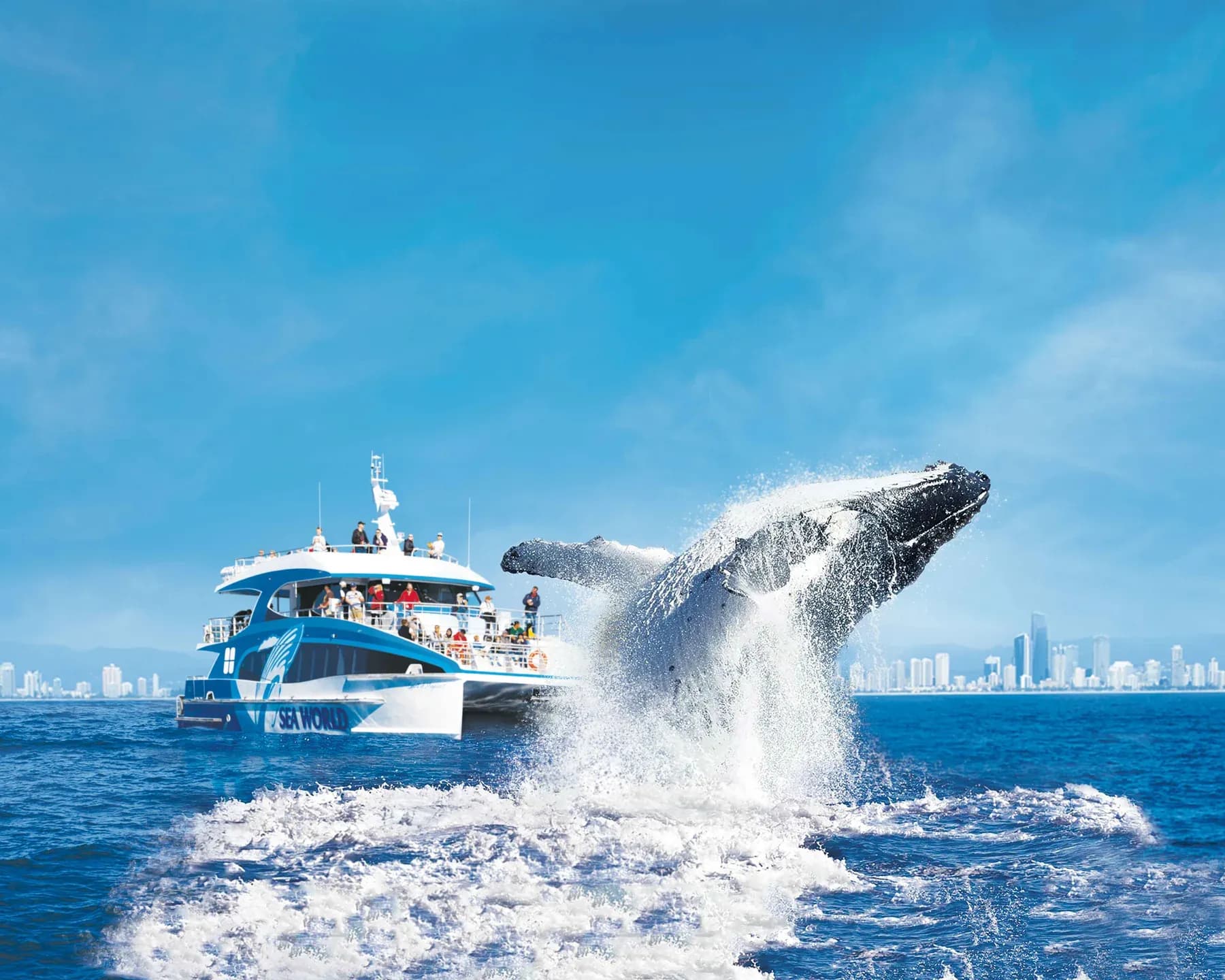
Breaching is one of the most iconic and spectacular behaviours sighted during whale watching experiences. Humpbacks breach more frequently than any other species of whale. The whales launch themselves out of the water, twisting and splashing back down. Why do they do it? Scientists believe it could be communication, parasite removal, or just pure fun. Either way, it's an unforgettable moment not to be missed.
Spyhopping
Who is watching who? Spyhopping occurs when a whale lifts its head vertically out of the water, allowing its eyes to peek above the surface. While the exact reason behind this behaviour remains a mystery, it's thought to be a way for whales to survey their surroundings. Some theories suggest it aids in navigation, while others believe it's simply driven by curiosity.
Mugging
Some whales are naturally curious and may approach a vessel; this is called mugging. They often stay metres from the boat, offering a close-up view of their impressive size and unique features. This rare interaction provides an incredible opportunity to observe these majestic creatures up close.
Fluke Down Dive
When a humpback prepares to dive, its massive tail, or fluke, lifts slightly above the surface before slipping beneath the waves. Unlike other whale species, humpbacks almost always tail fluke before diving, making it easy to spot when they're about to disappear below.
Fluke Up Dive
When diving deep, humpback whales lift their tails high above the water before plunging beneath the surface. The underside of each fluke is unique - much like a human fingerprint. Our onboard photographers capture these patterns to help scientists track individual whales' migration patterns and behaviours.
Pectoral Fin Slapping
When a whale surfaces, rolls onto its side, and slaps the water with one or both front fins (called pectoral fins), the behaviour is known as a pectoral fin slap. Humpbacks, which have the longest pectoral fins of any whale, often perform these dramatic slaps against the surface. Since sound travels farther underwater than through air, this may serve as a form of communication - or it might simply be play.
Blow
Whales are mammals and breathe air just like we do. When they surface, they release a misty blow which is a mix of saltwater and whale snot! Unlike humans, whales must consciously think about breathing, which means they never fully sleep; one half of their brain stays awake at all times. A whale's blow is often the first sign of whale activity - so keep your eyes peeled!
Spot the Marine Life
Sea World Cruises offers more than just a whale watching adventure! Experience a stunning array of marine life - from majestic whales, to playful dolphins, cruising turtles & soaring seabirds.
Humpback Whales
Humpback whales, known for their songs and acrobatic breaches, migrate vast distances from Antarctica to breed in the warmer waters of Queensland.
Bottlenose Dolphins
Indo-Pacific dolphins are a protected species, found along Australian coastlines. They can reach up to 2.6m long, 230kgs, have a lifespan of 50+ years, form complex social bonds and showcase playful behaviours.
Common Dolphins
Across the Atlantic & Pacific waters, common dolphins, with striking yellow flanks, live in social groups of thousands. They leap, bow-ride, and raise their young together.
Sea Turtles
Gold Coast's green & loggerhead turtles adjust body heat to water temperature. After 30 years, females return to the same beach where they hatched to lay their eggs. Only 1 in 1,000 hatchlings survives.
Sea Birds
The Broadwater is a wetland haven for migrating birds! Pelicans, eagles & more rest here, some even snacking on whale skin!
Hammerhead Sharks
Gold Coast's waters teem with schools of scalloped hammerheads. Watch for these majestic sharks, with their unique head shape slicing through the waves.
Minke Whale
The Gold Coast isn't just home to humpbacks! Keep an eye out for the rare minke whale - smaller and swifter than humpbacks, with distinctive white flippers.
Wildlife sightings & conditions
Whales choose when to approach, dive, rest or surface. Breaching, close approaches and sightings of other marine animals are possibilities rather than promises. Listen to the crew's commentary to understand the activity around the vessel.